
Tesla Cybercab Design Details — 2-Seat · 4680 · 48V · Steer-by-Wire
Published · Updated · By Investus editorial desk (SUNRYU Partners)
Tesla positions Cybercab as the primary vehicle in its Robotaxi fleet. It eliminates steering wheel, pedals and traditional controls to free up cabin space and reduce weight and operating costs. Core tech stack: 4680 battery cells, 48V architecture, and steer-by-wire.
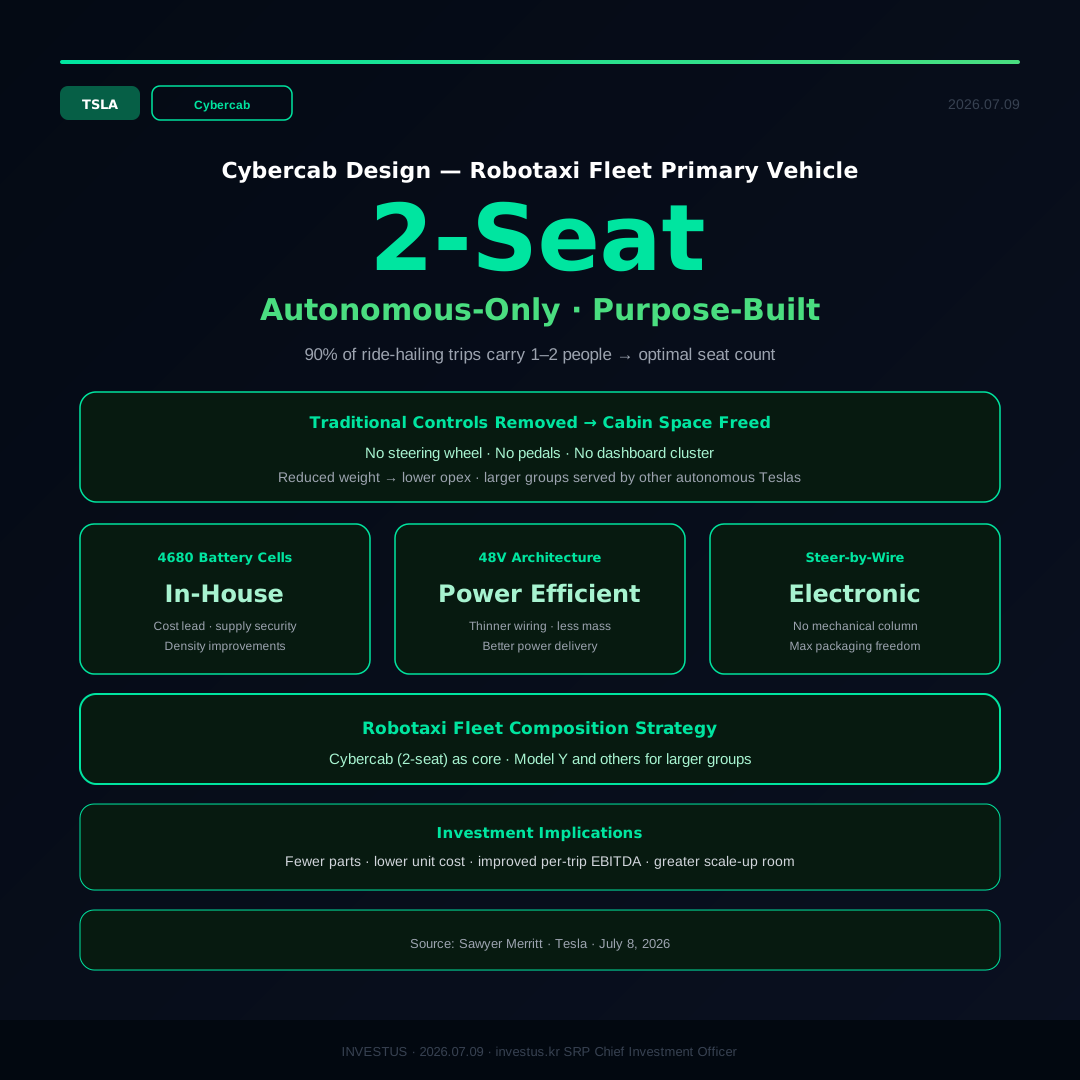
Rationale for Seat Count
• 90% of ride-hailing trips carry 1–2 people → 2-seat is optimal
• Larger groups served by Model Y and other autonomous Teslas
Why Remove Traditional Controls
• No steering wheel, pedals, or dashboard cluster
• Reduced weight → lower operating costs
• Freed cabin space → improved passenger experience
Core Technology Stack
1) 4680 Battery Cells (in-house)
• Cost lead · supply security · higher energy density
2) 48V Architecture
• Thinner wiring, less mass
• More efficient power delivery to different parts of the vehicle
3) Steer-by-Wire
• Mechanical steering column removed
• Maximum packaging freedom
Robotaxi Fleet Composition Strategy
• Cybercab (2-seat) = core, low-cost workhorse
• Model Y and other autonomous Teslas = cover larger groups
Investment Implications
• Fewer parts → lower unit cost · improved per-trip EBITDA
• Capital efficiency at scale · Robotaxi economics maximized
Sources & further reading
Related Guides
Related articles
Project Crystal Sun: What Musk Confirmed, What Fort Bend Agreed, and What Is Still Unverified
Musk posted the project name only. Fort Bend approved four incentive agreements. Tesla has not confirmed the site, a groundbreaking, or a production date.
Tesla Cybercab and NHTSA Special Order AQ26002: What Public Investors Can Actually Read
NHTSA’s Special Order AQ26002 asked Tesla under oath how Cybercab meets federal safety standards. What is public as of early November 2026 is a confidentiality claim over the sworn answers—especially Request 8—and a first-responder plan, not a finding of noncompliance. This guide maps the docket and Tesla’s primary filings. It is not a buy, sell, or price-target note.
Tesla confirms a Vietnam launch — into a market where VinFast already holds about 36% of new cars
A Tesla recruiter said on Oct. 28, 2026 that the company is “officially coming” to Vietnam and posted five jobs, including sales manager, service manager, and charging-project developer. Tesla Motors Vietnam LLC was registered in Ho Chi Minh City on Sept. 11. VinFast has taken about 36% of Vietnam’s new-car market in the first nine months of 2026. Southeast Asia is opening; tariffs, price, and charging will decide how large the opening is.
Disclaimer
This article is editorial research for informational purposes only. It is not investment advice, a recommendation, or a solicitation to buy or sell any security, and does not guarantee any return. Markets carry risk of loss. Verify figures against the primary sources before making decisions.