
Elon Musk: "Space Data Centers Are Easier to Build Than on Earth" — STARMIND Vision, Solar·Radiative Cooling·Starlink Laser
Published · Updated · By Investus editorial desk (SUNRYU Partners)
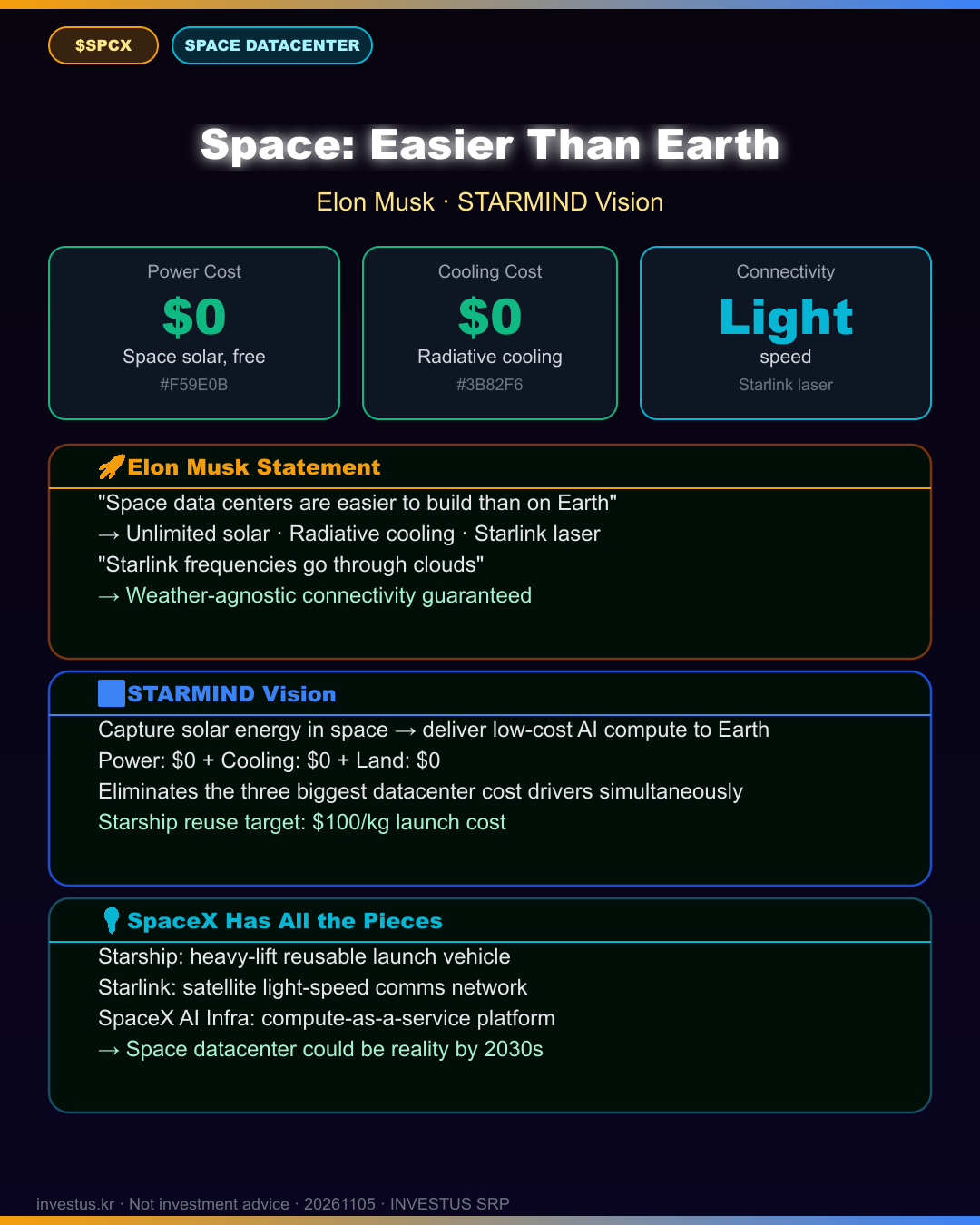
Elon Musk stated: 'Putting AI data centers in space could be simpler than on Earth.' Three advantages: unlimited solar power (no battery needed), radiative cooling (zero cooling energy), Starlink laser links (weather-agnostic). The STARMIND concept captures solar energy in space to deliver low-cost, high-performance AI compute to Earth — eliminating power, cooling, and land costs simultaneously.
A full English translation of this report is in progress. The analysis below reflects the original Korean research. Read the Korean original →
Sources & further reading
See the body and ticker IR links for sources on this note.
Related Guides
Related articles
Anthropic's $120.5B SpaceX Compute Deal: What the 90-Day Exit Clause Means After the 'Mid-2027' Report
Anthropic's S-1/A caps SpaceX compute at $120.5B with a 90-day exit after early 2027. What the 'mid-2027' report adds and what remains unconfirmed.
35,578 Open Grok Build Apps: What Claroc Measured and What SpaceXSI Disputes
SpaceXSI's Grok Build: Claroc says 35,578 published apps opened with no sign-in. What was measured, what SpaceXSI disputes, and open questions.
Starship Flight 15 Explained: SpaceX's First Attempt to Catch Both Stages, What Is Confirmed and What Investors Should Watch
SpaceX says Starship Flight 15 is preparing to launch as soon as Friday, November 13, 2026, pending regulatory approval, on the first plan to catch both Super Heavy and the Starship upper stage. The 75-minute window opens at 4:45 p.m. CT. This note separates confirmed facts, company plans, secondary reports, and open questions. It is not a buy, a sell, or a share-price call.
Disclaimer
This article is editorial research for informational purposes only. It is not investment advice, a recommendation, or a solicitation to buy or sell any security, and does not guarantee any return. Markets carry risk of loss. Verify figures against the primary sources before making decisions.